Showing posts with label Oncology Journal. Show all posts

Thursday, March 12, 2020

Lupine Publishers | Acute Erythroblastic Leukemia Revealed by Dermatological Manifestations

Lupine Publishers | Open Access Journal of Oncology and Medicine

Abstract

Acute erythroblastic leukemia is characterized by the proliferation of a predominant erythrocyte population on other lineages. Cutaneous manifestations remain rare and misleading, making the diagnosis of difficult to suspect as first-line. Here, we report an unusual and rare case of acute leukemia in a 24 year old male with gingival hypertrophy and dermatological manifestations. This case emphasizes that dentist and dermatologist should be well acquainted with these manifestations of systemic diseases.

Case Report

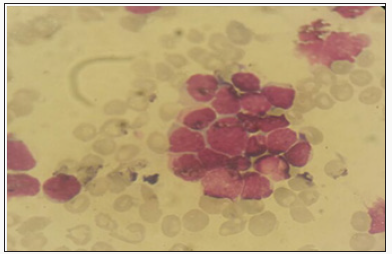
We report the case of 24 years old patient, with no significant pathological history, who had a rash for 10 days in a context of fever and very bad general condition. At admission the patient was febrile, tachycardic and dyspneic. Physical examination revealed erythemato-purplished papulo-nodules on the face, trunk, limbs and a gingival hyperplasia. The oral state was deplorable. Bilateral cervical lymphadenopathy was also found without the patosplenomegaly (Figures 1-3). The biological assessment showed a CRP of 150 and a pancytopenia with a Hbat 7.5g / dl, normal VGM and CCMH, a deep thrombocytopeniaat 85000 / l, leukocytesat 1500 / l. The blood smear showed 35% of circulating blasts and 22% of erythroblasts (Figure 4).
Figure 1: Clinical Manifestations of AML.
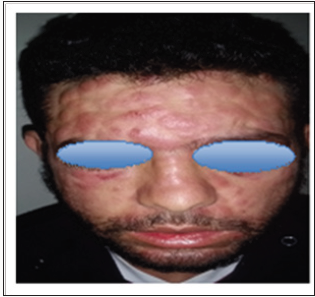
Figure 2: Clinical Manifestations of AML.
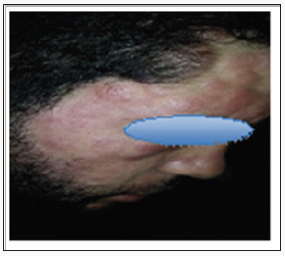
Figure 3: Clinical Manifestations of AML.
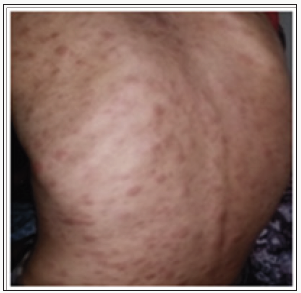
Figure 4: Blood smear showing 35% of circulating blasts.
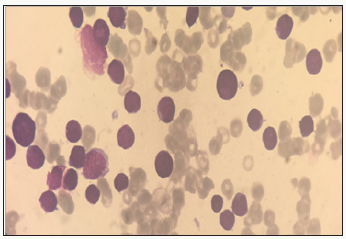
The medullo gram showed a hyper-cellular marrow with a rate of myeloblasts greater than 45% compared to all non-erythroblastic elements and erythroblastic hyperplasia estimated at more than 65%; with signs of dyserythropoiesis suggestive of the diagnosis of erythroleukemia (Figure 5). Blood immune phenol typing was positive for CD13, CD33, MPO and Glycophotin A. The evolution was unfavourable; the patient died due to massive alveolarhemorrhage.
Figure 5: Hyper cellular marrow infiltrated by a blastic contingent estimated at 45%.
Discussion

Acute erythroblastic leukemia is characterized by the proliferation of a pre dominantery throcyte population on other lineages. There are two types: Erythroleukemia: defined by the presence in the bone marrow of more than 50% of the erythroid precursors of all the medullary cells, and more than 20% of myeloblasts of the whole non-erythrocytemedullary cells - Pure erythroid leukemia: it presents a neoplastic proliferation made of more than 80% of erythrocyte cells without obvious presence of the myeloblastic contingent [1]. It is usually manifested by signs of bone marrow failure and cytopenia [2,3], skin involvement remains rare, varied and disorienting the diagnosis; they are found mainly in Acute myelovlastic leukemia [4,5]. Cutaneous manifestations during leukemia are infrequent and varied. They designate all the cutaneouslesions related to the haematological malignancy directly or indirectly following their treatment; we essentially distinguish.
The specific dermatological lesions which can reveal hematological diseases [4], are mainly represented by leukaemides (leukaemia cutis), which are red brown to purple dermal papules, plaques or nodules. Granulocyticsarcom as an extra-medullary tumour masses, ulcerated plaques and gingival hypertrophy [5]. The infectious dermatoses secondary to the biological disturbances accompanying the malignan themopathy and their treatments. The occurrence of specific cutaneouslesions in leukemia is synonymous with a major aggravation of the prognosis (with for example a survival twice as short if there is a specific cutaneous involvement); this seriousness make some authors propose different treatments with a medium-long stay hospitalization[6-8].
In our case, acute myelonlastic leukemia 6 (AML 6 ) was revealed by diffuse leukemias resulting from the infiltration and proliferation of malignantha ematological cells (blasts) in the skin and by gingival hyperplasia secondary to mucosal infiltration [5]. The clinical presentation of acute leukemia including AML6 in the form of ulcer ativenecroticgingivitis in the foreground, is a rare form to be remembered, mentioned in all courses of medicine and dentistry, stipulating that Gingival involvement is a classic feature of leukemia [6] The frequent association of skin cancers with haematological malignancies is also highlighted in several publications [5].

Conclusion

The cutaneous localizations are among the rarest extreme dullary lesions of acute myeloid leukaemia’s (AML) not exceeding 1%. They are generally considered as factors of worse prognosis. Their cytogenetic or mutational specificities remain un established to date.


For More Lupine Publishers Open Access Journals Please visit our Website:

For more Open Access Journal of Oncology and Medicine Please Click Here: https://lupinepublishers.com/cancer-journal/

 
Follow on Twitter   :  https://twitter.com/lupine_online


Thursday, January 23, 2020

Lupine Publishers| Immunotherapy in Some Types of Tumors

Lupine Publishers| Open Access Journal of Oncology and Medicine


Charasteristics


a) Immunotherapy exerts its antitumor action by stimulating the response immune response of patients to cancer, unlike classic treatments, which directly attack the tumor
b) Previously immunotherapy was limited to patients in whom the conventional treatment, usually with chemotherapy, but currently in patients with some types of tumors, such as melanoma or some lung cancers, is already considered the treatment of first choice
c) Immunotherapy is able to control some types of malignant tumors prognosis very long, even for several years
d) Immunotherapy exerts its antitumor action by stimulating the immune response of patients against cancer, unlike classic treatments, which attack directly to the tumor. This implies a series of advantages and characteristics of this novelty strategy.
e) Its main advantage is its ability to control the tumor for very long periods of time in a certain percentage of patients, which varies according to the type of cancer. In some patients with tumors that were previously considered incurable, at this time they are getting very long survivals, even years.
f) Currently, immunotherapy with antibodies that block PD-1 receptors or action on these PD-L1 protein receptors has shown efficacy against a large number of tumors, including among others melanoma, cancers of the lung, kidney, bladder, these treatments are usually administered intravenously and their toxicity is usually lower than conventional treatments, such as chemotherapy
g) However, between a 5-15% of patients can develop relevant toxicities, which are usually due to the activation of the immune system against the patient’s own organism. The organs most frequently affected by these reactions are: the lung (“pneumonitis”), which manifests in the form of cough and shortness of breath; and the digestive tract (“colitis”), which presents as diarrhea. When they are used as unique drugs,
which is the most usual Now a days, toxicity is not usually a major problem. However, when they use in combination, their frequency and severity is greater. New immunotherapy strategies Despite these results, there is still a long way to go, given that today Only 40-60% of melanoma patients benefit from these treatments between 10 and 30% of patients with other types of tumors.
Some of the main ones Developing strategies to improve the effectiveness of immunotherapy are:

a) Combination Immunotherapy: During the development of a tumor it is they can alter several phases of the immune response. Therefore, the use simultaneous treatment of two or more immunotherapy treatments is one of the strategies more used to increase antitumor efficacy. The combinations of immunotherapy have shown significant activity in patients with melanoma and renal cancer. The main mechanisms of action of drugs which are used for these combinations are: directly activate the answer immunological; unlock the inhibition of the immune response produced by many tumors; or provide fundamental elements to trigger the immune response, as antigens or cells of the immune system New vaccines: antitumor vaccines consist of administering patient tumor antigens (small fragments of it, usually proteins), for the immune system to recognize them and thus put in place the antitumor immune response. Modern molecular biology techniques have allowed to advance a lot in the processes of selection of antigens with greater possibilities of triggering these responses and, therefore, this is one of the most hopeful ways for the development of new treatments of immunotherapy. Currently there is an anti-cancer vaccine against cancer prostate whose use in patients is approved in the USA. (Sipuleucel). In addition, some vaccines against infectious diseases can confer a high degree of protection against tumors associated with them (for example: human papilloma virus, associated with cervical cancer, or hepatitis B virus, associated with hepatocarcinoma).Vaccination against these viral infections dramatically reduces the incidence of associated tumors.

b) CAR-T Cells (Chimeric Antigen Receptor, or Antigenic Receptor Chimeric): It consists of extracting the patient’s immune cells; process them in the laboratory to express an antigen that specifically recognizes to tumor cells; and readminister them to the patient, to attack the tumor. This strategy is having considerable efficacy in patients with some types of leukemia, although its use in patients with solid tumors It seems more complicated. In addition, it is associated with relevant toxicities, although the Most can be controlled with specialized medical care. As we have already seen, the small advances, taken together, are relevant. From here our motto from SEOM: In Oncology, each advance is written in capital letters. These small advances, considered each of them in isolation, could have have been considered of little relevance, but accumulated among themselves have led to change in many cases in a remarkable way the prognosis and the quality of life of many patients. In oncology, each advance is written with capital letters (madrid, february 19, 2018).

c) CAR-T cells (Chimeric Antigen Receptor, or Antigen Receptorchimeric): it consists of extracting the patient’s immune cells; process them in the laboratory to express an antigen that specifically recognizes to tumor cells; and readminister them to the patient, to attack the tumor. This strategy is having considerable efficacy in patients with some types of leukemia, although its use in patients with solid tumors. It seems more complicated.

Read More Lupine Publishers Oncology and medicine Articles : https://lupine-publishers-cancer-journal.blogspot.com/

Read More Lupine Publishers blogger Articles : https://lupinepublishers.blogspot.com

Friday, September 13, 2019

Lupine Publishers | Central Nervous System Manifestation of Multiple Myeloma: A Case Report

Lupine Publishers | Open Access Journal of Oncology and Medicine

Abstract

Multiple myeloma accounts for <1% of all malignancies and Central nervous system (CNS) manifestation of multiple myeloma (MM) is rare. Multiple myelomais characterized by malignant transformation of plasma cells that produces immunoglobulin chains. The accumulation of plasma cells in bone marrow results in clinical features like anaemia, osteolytic lesions, hypocalcaemia, renal failure and immunodeficiency [1,2]. The involvement of central nervous system is very uncommon in multiple myeloma and it may present early or late during the course of disease. The neurological symptoms can be diffuse headache, persistent vomiting, vertigo, weakness in limbs, urinary incontinence etc. Symptoms can be attributed to spinal cord or nerve root compression, peripheral neuropathies, and uremia [3,4]. Likely risk factors of CNS manifestation are unfavourable cytogenetics, high tumour load, low marrow involvement. In this report we describe a patient with CNS involvement after receiving systemic chemotherapy and symptomatic treatment.
Keywords: Central nervous system, Multiple myeloma

Case Report

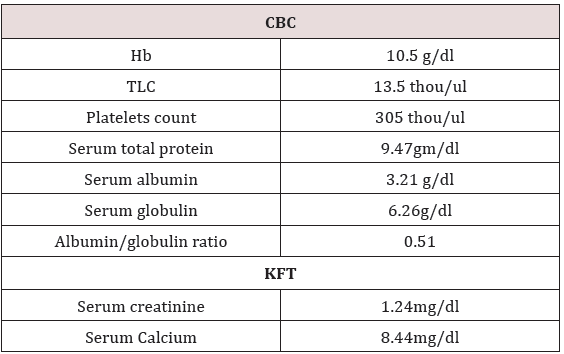
A 52 years pleasant lady presented with complaint of pain in left leg with lower backache and tingling sensations for 10 days. Subsequently she developed pain in right leg followed by urine incontinence. MRI Lumbosacral Spine was done which reported ill defined lesions at L3-L4 vertebra (with associated periosseous fluid collections) and multiple focal lesions in the L4 vertebra, bilateral sacral ala and both iliac bones along with indentations upon the thecal sac by spondyliticridges, secondary spinal canal stenosis and neural foraminal narrowing at multiple levels and left exiting nerve root compression at L3-L4, L5-S1 levels (Table 1). She underwent L1-L5 stabilization, L3 decompression with laminectomy, biopsy, posterolateral fusion with local autograft. Histopathology reported plasma cell dyscrasia at L3-L4 level. Immunohistochemistry reported tumor cells are focally positive for CD-138 and kappa light chain and negative for lambda light chain. On further evaluation bone marrow biopsy reported plasma cells approximately 50% of total nucleated cells suggestive of plasma cell myeloma. Bone marrow aspiration shows plasmacytosis approximately 24% of total nucleated cells which confirmed the diagnosis. She received 15 cycles of Bortezomib and Thalidomide.
Table 1:
Lupinepublishers-openaccess-cancer-Oncology
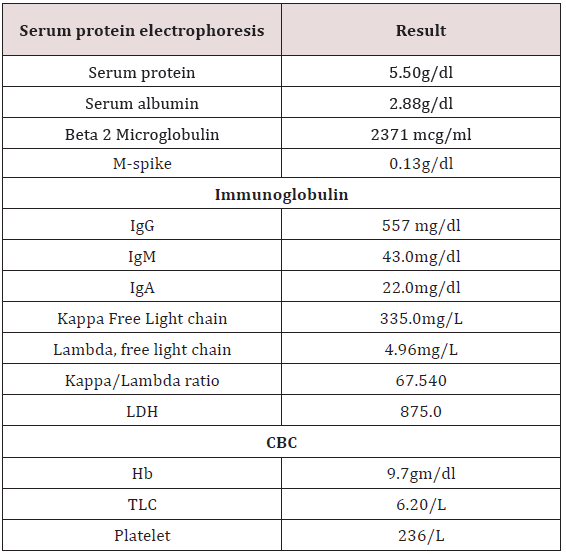
Table 2:
Lupinepublishers-openaccess-cancer-Oncology
In view of persistent pain in legs MRI dorsal spine was done which reported well defined altered intensity expansile lesion in L3 vertebra extending into epidural space. She received palliative external beam radiotherapy to L3 vertebra 30Gy/10 fractions. She remained asymptomatic for a month. Then she presented with complaint of lower limbs weakness and nausea, loss of appetite, constipation, weight loss (Table 2). USG whole abdomen was done which reported multiple hypoechoic masses in epigastric region. Whole body PET CT reported metabolically active soft mass lesion in gastro hepatic region measuring 9.7x5.5 cm SUV max 20.3, recto uterine pouch measuring 9.2 x 7.8cm SUV 20.9, left iliac fossa measuring 7.2x4.0cm- ?mitotic, metabolically active mesenteric nodes measuring upto 2.2cm-? mitotic and metabolically active lytic lesion involving L3 vertebra with paravertebral soft tissue component infiltrating left psoas muscles.
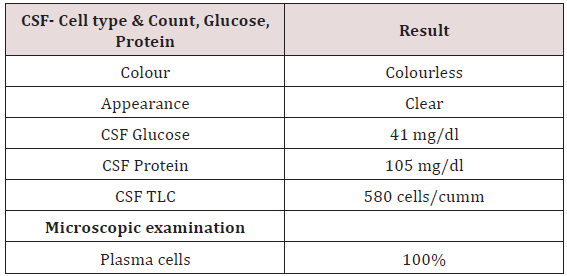
Table 3:
Lupinepublishers-openaccess-cancer-Oncology
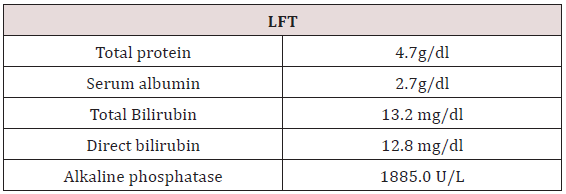
Table 4:
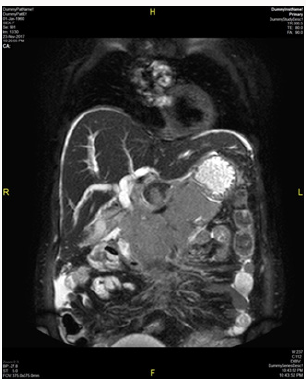
Lupinepublishers-openaccess-cancer-Oncology
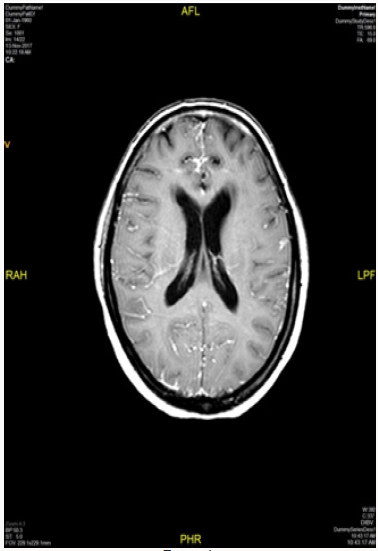
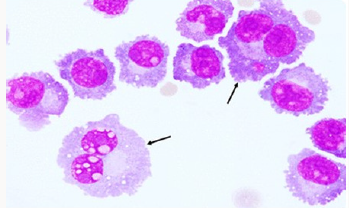
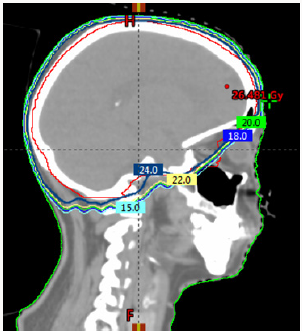
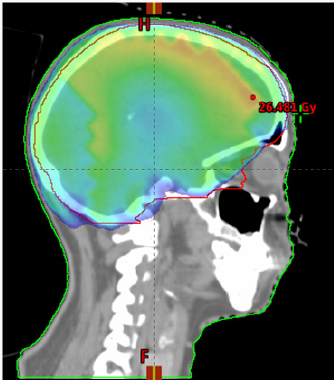
To confirm the diagnosis CT guided core needle biopsy from supraumbilical mass was done which was compatible with multiple myeloma. She then received 1st cycle of Bortezomib, cyclophosphamide and dexamethasone. After few days, she developed headache, giddiness and syncopal attacks. On evaluation CEMRI brain reported diffuse leptomeningeal enhancement involving both cerebral as well as cerebellar hemispheres. Mild enhancement of basal cistern with associated marginal dilation of ventricular system (Figure 1). In view of above mentioned complaints, cerebrospinal fluid study was done (Table 3) (Figure 2). CEMRI spine was done which reported no abnormal enhancement in vertebra, cord or thecal sac (Figures 3 & 4). She received 7 fractions (14 Gy) out of 12 planned fractions (24Gy) of whole brain radiotherapy and two intra thecal injection of methotrexate. MRI upper abdomen with MRCP reported large mass replacing entire head and body region of pancreas. Mass encases and compresses CBD with mild bilobar intra hepatic biliary radical dilation. There is also encasement of second part of duodenum with possible infiltrartion of adjacent hepatic parenchyma as well. Features are suggestive of aggressive pancreatic malignanacy, possibility of pancreatic lymphoma. Thickening and edema of gall bladder wall was seen which was suggestive of concomitant cholecystitis. She was advised for ERCP with SEMS placement which was refused by attendants (Figure 5). In view of her deranged liver function test, both radiotherapy and methotrexate were discontinued and she was maintained on supportive care (Table 4).
Figure 1:
Lupinepublishers-openaccess-cancer-Oncology
Figure 2:
Lupinepublishers-openaccess-cancer-Oncology
Figure 3:
Lupinepublishers-openaccess-cancer-Oncology
Figure 4:
Lupinepublishers-openaccess-cancer-Oncology
Figure 5:
Lupinepublishers-openaccess-cancer-Oncology

Discussion

Central nervous system is a rare location of involvement in MM, however it should be considered if a patient with MM presents with neurologic symptoms. Patients with MM often have neurological complications, either due to metabolic disorders such as hypocalcaemia, uraemia and hyper viscosity or due to peripheral neuropathy, spinal cord compression and cranial nerve infiltration [1,2]. The most common cause is spinal cord compression and cranial nerve infiltration [3,4]. The patient may present as a known case of MM with CNS features or as a new case with CNS symptoms. The clinical presentation depends on degree and site of infiltration. The symptoms and signs are headache, memory loss, behavioural changes, convulsions, nausea, vomiting, vertigo, urinary incontinence, backache, and limb weakness [3,4]. These symptoms can be attributed to spinal cord or nerve root compression, raised intracranial tension, meningeal inflammation [5]. In our case she presented with the complaint of headache, giddiness and syncopal attacks. This can be explained by CEMRI brain imaging which reported diffuse leptomeningeal enhancement involving both cerebral as well as cerebellar hemispheres. CSF study was done to reported to be negative. She received 7 fractions out of 12 fractions planned for whole brain radiotherapy and two injections of intrathecal Methotrexate injections [6]. In view of deranged LFT, radiotherapy and IT chemotherapy was stopped and was managed conservatively. She passed away after 2 weeks due to sepsis with LRTI with MM as underlying cause.

Conclusion

In conclusion this patient had an aggressive disease in view of abdominal deposits and unresponsiveness to multiple lines of systemic disease. CNS involvement in cases of MM portends extremely poor prognosis and median overall survival of <6 months. While in this case there was CSF infiltration which would portend even poorer prognosis but she succumbed to sepsis due to Lower respiratory tract infection. CNS disease in MM can be effectively palliated especially because of relative radio sensitivity of MM due to which early responses are seen at lesser doses and an early diagnosis can improve quality of life effectively.

For more Lupine Publishers Open Access Journals Please visit our website: http://lupinepublishers.us/ For more Open Access Journal of Oncology and Medicine Please Click Here: https://lupinepublishers.com/Cancer-journal/
To Know More About Open Access Publishers Please Click on Lupine Publishers


Wednesday, July 17, 2019

Oncology and Medicine Journals - Lupine Publishers

What is beyond the Nivolumab Monotherapy approval for advanced Hepatocellular Carcinoma? By Luis Mendoza In Open Access Journal of Oncology and Medicine (OAJOM)- Lupine Publishers


With an estimated 500,000 new cases per year, hepatocellular carcinoma (HCC) represents the third leading cause of cancer death worldwide. The incidence is rising in the west, largely due to an increasing incidence of hepatitis C virus infection [1]. The majority of HCC patients are diagnosed with disease too advanced for curative treatment. Only liver resection and liver transplantation are considered curative, with poor efficiency of other modalities such as radiofrequency ablation (RFA) and transarterial chemoembolization (TACE), although this may provide a modest prolongation in survival; however, the relapse in the majority of these patients is inevitable [2]. An array of translational research and pilot clinical trials have revealed that adoptive immunotherapy’s are safe by patients with HCC, but they lack efficacy [3]. Now, we are in the new era of immunotherapy’s such as immune checkpoint inhibitors and CAR-T strategies, which would bring benefit to the HCC patients.On September 22, 2017, the Food and Drug Administration granted accelerated approval to nivolumab (OPDIVO, Bristol- Myers Squibb Co.) for the treatment of HCC in patients who have been previously treated with sorafenib. The approval was based on a 154-patient subgroup of CHECKMATE-040 (NCT 01658878), a multicenter, open-label trial conducted in patients with HCC and Child-Pugh. A cirrhosis who progressed on or were intolerant to sorafenib. Patients received nivolumab 3 mg/kg by intravenous infusion every two weeks. The confirmed overall response rate, as assessed by blinded independent central review using RECIST 1.1, was 14.3% (95% CI: 9.2, 20.8), with three complete responses and 19 partial responses. The response duration ranged from 3.2 to 38.2+ months; 91% of responders had responses lasting six months or longer and 55% had responses lasting 12 months or longer. Adverse reactions occurring in patients with HCC in CHECKMATE-040 were similar to those previously reported in product labelling, with the exception of a higher incidence of elevations in transaminases and bilirubin levels [4].

For More Information
https://lupinepublishers.com/cancer-journal/fulltext/What-is-beyond-the-nivolumab-monotherapy-approval-for-advanced-hepatocellular-carcinoma.ID.000109.php

For more Lupine Publishers Open Access Journals Please visit our website: https://lupinepublishersgroup.com/

For more Oncology and Medicine Journals  articles Please Click
Here: https://lupinepublishers.com/cancer-journal/

Wednesday, June 19, 2019

Oncology research journals - Lupine Publishers

Targeting the Immune Checkpoint in Cancer: Is This a Viable Treatment Option for AML? by Steven J Coles in Open Access Journal of Oncology and Medicine (OAJOM) - Lupine Publishers

The immune suppressive mechanisms displayed by malignant cells are considered a central process in the pathogenesis of cancer. Research in this area has gained significant momentu mover the past 20 years, with several immune checkpoints identified, including; CTLA-4, CD200/CD200R, Tim-3/Galectin-9 and PD-L1/PD-1 (Figure 1). Whilst characterising the molecular basis of leukaemia for risk stratification remains at the forefront of AML research; this must now extend to understating how the seimmune checkpoint path ways fit into the equation. A good example of why this is important is to consider CD200expression level in AML, which is a negative prognostic indicator [1]. CD200 is an immunosuppressive lig and, that when engaged with its receptor CD200R, has the capacity to attenuate T-cell and NK-cell anti-tumour activity in AML. Interestingly, most cases of CBF AML express high levels of CD200, yet CBF AML performs relatively well clinically. This paradox suggests there is a complex interplay between AML molecular heterogeneity and immune surveillance. Given the recent development and FDA approval of several immune checkpoint therapies, a full understanding of these processes and integration with standard molecular risk stratification is warranted.

For More information

For more Lupine Publishers Open Access Journals Please visit our website
For more Oncology research journals  articles Please Click
Here: https://lupinepublishers.com/cancer-journal/

Thursday, June 6, 2019

oncology journal articles - Lupine Publishers

Promising Role of Fractional Calculus in Biomedicine and Biophysics by Hosein Nasrolahpour in Open Access Journal of Oncology and Medicine - Lupine Publishers

The study of complex systems and investigation of their structural and dynamical properties have attracted considerable interests among scientists in general and physicists, biologists and medical researchers in particular. Complex systems can be found almost everywhere however the highest level of complexities is related to living and biological organisms and systems. Due to the lack of a reliable and effective tool to investigate such systems, we have not reached to the complete understanding and comprehensive pictures of the phenomena and processes which occur in these systems. Of course a comprehensive knowledge of biological and biomedical complex phenomena will be achieved when we employ simultaneously different field of science and engineering including: biology, chemistry, physics, mathematics, mechanical engineering and so on.

For More information  

For more Lupine Publishers Open Access Journals Please visit our website
https://lupinepublishers.com/index.php
For more Oncology journal articles  articles Please Click

Lupine Publishers | Open Access Journal of Oncology and Medicine (OAJOM)

      Thanksgiving   is a national   holiday   celebrated on various dates in the United States, Canada, Grenada, Saint Lucia, and Liberia. ...